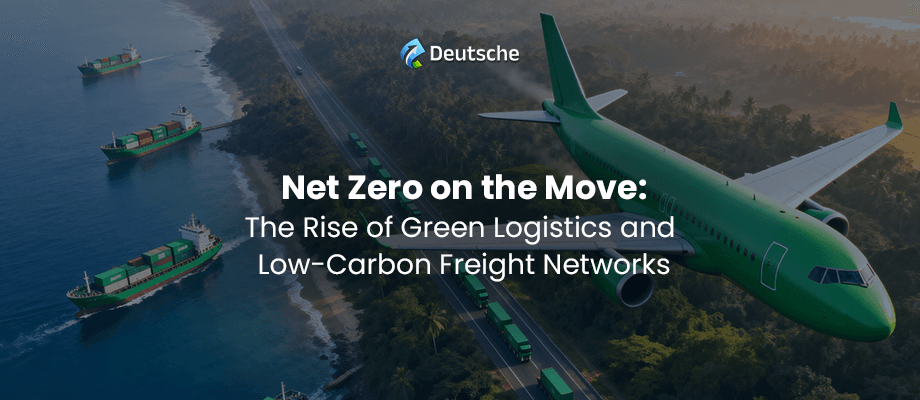
The arteries of commerce are pulsing with a new imperative. Across India's vast and vibrant landscape, from the bustling ports of Mumbai to the industrial hubs of the Gurugram, a quiet revolution is underway. It’s the shift towards green freight—a fundamental reimagining of how goods move, with sustainability at its core.
For decades, the logistics and supply chain sector has been the unseen engine of economic growth. Yet, its environmental footprint—accounted for by diesel-guzzling trucks, energy-intensive warehouses, and complex last-mile deliveries—has become impossible to ignore. Today, the convergence of climate urgency, economic prudence, and evolving corporate responsibility is fuelling the rise of sustainable logistics. This isn't a niche trend; it's the future of freight.
Why the Push for Green Freight in India is Non-Negotiable
India stands at a pivotal crossroads. As one of the world's fastest-growing major economies, the demand for freight transport is projected to skyrocket. Without intervention, this growth will come with a steep environmental cost. However, this challenge presents an unparalleled opportunity. Embracing freight sustainability is no longer just about "doing good"; it's a strategic business essential driven by:
- Government Mandates & Policy Push: With ambitious commitments at COP26 and the launch of initiatives like the National Logistics Policy and the 'Harit Sagar' Green Port guidelines, the government is creating a robust regulatory framework encouraging low-carbon operations.
- Corporate Climate Commitments: Major Indian corporates and MNCs operating here are publicly committing to Science-Based Targets (SBTi) and Net-Zero goals. Their supply chains, or "Scope 3 emissions," are a major focus, pushing partners towards green freight transportation.
- Economic Efficiency: Fuel can constitute up to 60% of a truck's operational cost. Strategies that reduce fuel consumption directly slash costs and insulate businesses from volatile oil prices, making greening of freight package a direct contributor to the bottom line.
- Investor & Consumer Preference: Sustainability is a key metric for investors and a growing influence on purchasing decisions. A demonstrably green supply chain enhances brand reputation and competitive advantage.
The Practical Playbook: Key Strategies for Greening Your Freight
Transitioning to a sustainable model requires a holistic approach. Think of it as a multi-faceted greening of freight package, where each element contributes to the whole. Here are the core strategies pioneering companies are implementing.
1. Fleet Modernization and Alternative Fuels
The bedrock of green freight transport is the vehicle itself.
- Electric Vehicles (EVs): While challenges around long-haul charging infrastructure remain, EVs are perfect for intra-city, last-mile, and short-haul logistics. The Total Cost of Ownership (TCO) is becoming increasingly favourable.
- Compressed Natural Gas (CNG): CNG is a readily available, cleaner alternative to diesel, offering significant reductions in particulate matter and carbon emissions. It's a powerful transitional fuel for the Indian market.
- Hydrogen: For the long term, green hydrogen holds promise for heavy-duty trucking, offering zero emissions with the range and refuelling speed comparable to diesel.
- Telematics and IoT: Installing sensors and GPS systems provides real-time data on fuel consumption, idling time, harsh braking, and route adherence, enabling data-driven decisions that enhance freight sustainability.
2. Operational Excellence through Technology
Efficiency is the lowest-hanging fruit in the green freight journey.
- Route and Load Optimization: Advanced software can calculate the most fuel-efficient routes, avoiding traffic and poor road conditions. Furthermore, maximizing truck load capacity through better planning ensures fewer trips for the same volume of goods—a direct win for sustainability in freight forwarding.
- Intermodal Shift: Where feasible, shifting a portion of freight from road to more energy-efficient rail or coastal shipping can dramatically cut carbon emissions. This development of low-carbon freight networks is a key national priority.
- Warehouse & Facility Efficiency: "Greening" the supply chain extends beyond the wheels. Implementing energy-efficient lighting (LEDs), solar panels, rainwater harvesting, and smart building management systems in warehouses significantly reduces the overall carbon footprint.
3. The Human Element: Driver Training and Culture
A vehicle is only as efficient as the person behind the wheel. Eco-driving techniques—such as smooth acceleration, maintaining steady speeds, and reducing idle time—can improve fuel efficiency by 5-15%. Investing in regular driver training programs is a critical, yet often overlooked, component of the green freight handbook.
Navigating the Roadblocks to a Green Transition
The path to a fully green supply chain is not without its obstacles. Companies often face:
- High Upfront Investment: The capital expenditure for EVs, CNG trucks, or warehouse solar systems can be daunting.
- Infrastructure Gaps: A consistent and nationwide network of EV charging or hydrogen refuelling stations is still in development.
- Fragmented Industry: India's trucking ecosystem is highly fragmented, with a majority of operators being small owners, making standardized adoption of new technologies challenging.
Overcoming these hurdles requires a blend of phased planning, exploring innovative financing models, and leveraging available government subsidies.
Your Blueprint for a Sustainable Logistics Future
The journey toward sustainable logistics can seem complex, but it begins with a single, strategic step. The principles outlined here are the very foundation of what you might find in a detailed green freight handbook—a practical guide to decarbonizing your operations.
At Deutsche Consulting, we understand that each business's path to sustainability is unique. We partner with forward-thinking organizations to translate these strategies into actionable, cost-effective roadmaps. Our expertise lies in conducting detailed diagnostics, identifying the highest-impact opportunities within your specific supply chain, and helping you build a resilient, efficient, and truly green freight network that is prepared for the future.
Ready to build your green supply chain? Let's start a conversation. Contact Deutsche Consulting today to schedule a strategic consultation.